
1. Overview of Drilling Rig Classification
Drilling rigs are classified through multiple dimensions including drilling method, mobility, application purpose, and depth capacity. Understanding these classification systems is essential for proper equipment selection and successful project execution. The primary classification framework distinguishes between rotary drilling rigs, percussion drilling rigs, and combined rotary-percussion systems, each with distinct operational characteristics and application ranges. Additional classification criteria include power source (diesel, electric, or hybrid), drive system configuration (top drive versus rotary table), and structural design (conventional versus compact modular layouts). Each classification category represents optimized engineering solutions for specific operational requirements and environmental conditions.
2. Classification by Drilling Method
Rotary drilling rigs utilize continuous rotation of the drill string to achieve drilling penetration, suitable for a wide range of geological formations from soft sediments to hard rock. These rigs typically employ rotary tables or top drives to transmit rotational power through the drill string to the drill bit. Percussion drilling rigs deliver repeated impact blows to the drill bit, creating fracture and fragmentation in hard rock formations where rotary methods prove inefficient. pneumatic hammer drills represent a common percussion technology, delivering high-frequency impacts while maintaining rotation for bit cleaning and progressive penetration. Combined rotary-percussion rigs integrate both operating modes, enabling efficient drilling across mixed geological sequences containing both soft and hard formations within the same borehole.
3. Classification by Mobility Configuration
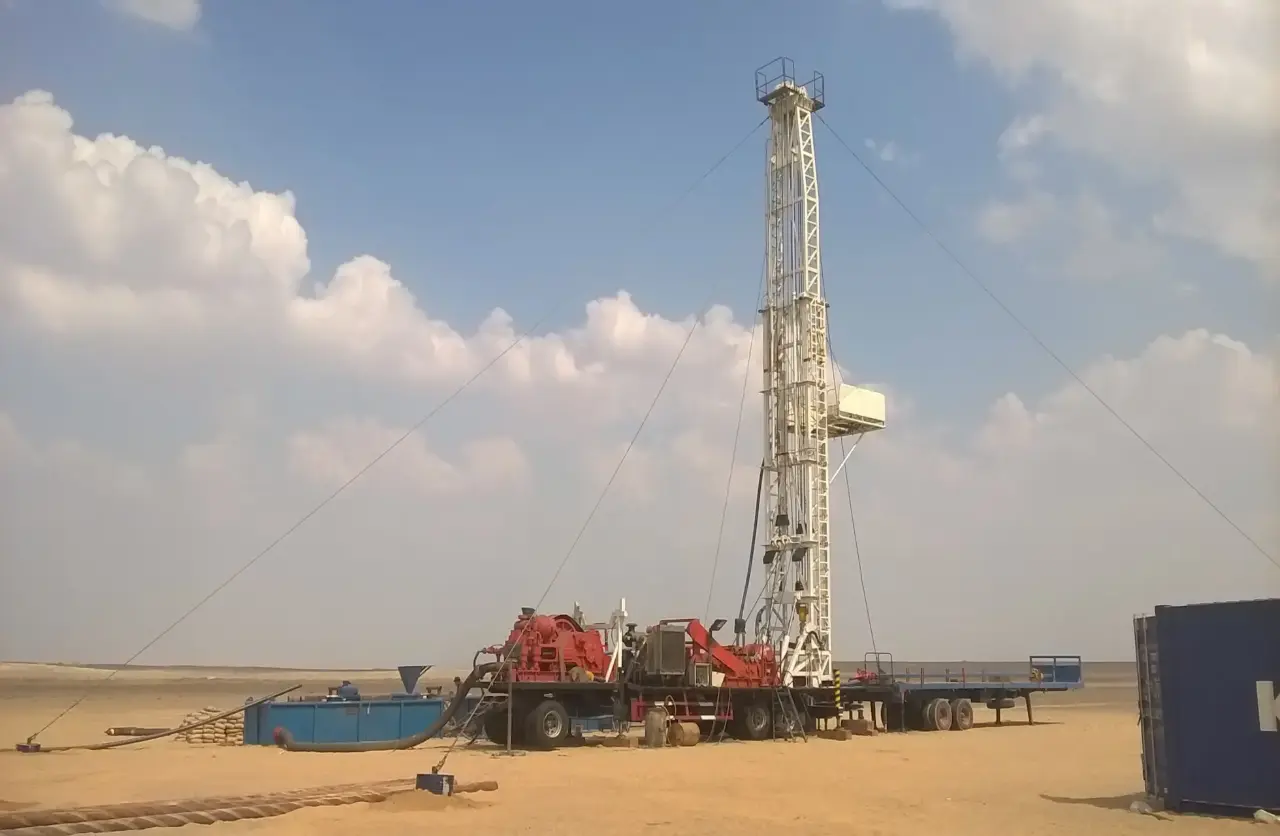
Stationary drilling rigs are permanently installed at dedicated drilling locations, offering maximum stability and load capacity for extended drilling programs and deep well construction. These installations typically feature concrete foundations, permanent power connections, and comprehensive support facilities that maximize operational efficiency for long-term projects. Mobile drilling rigs incorporate wheels, tracks, or trailer configurations that enable relocation between drilling sites without complete disassembly. Truck-mounted rigs provide excellent road mobility for rapid deployment to multiple shallow to medium-depth borehole locations. All-terrain crawler rigs traverse challenging landscapes including soft ground, steep slopes, and remote wilderness areas where conventional vehicles cannot operate effectively.
4. Classification by Application Purpose
Oil and gas drilling rigs are engineered for hydrocarbon exploration and production, featuring high depth capacity, large-diameter well construction capability, and sophisticated well control systems. These rigs operate under demanding conditions including high pressures, elevated temperatures, and corrosive environments encountered in oil and gas reservoirs. Water well drilling rigs focus on groundwater extraction, typically requiring less extreme specifications than oil and gas equipment while emphasizing reliable performance in unconsolidated formations. Mineral exploration drilling rigs prioritize core sample recovery for geological analysis, featuring specialized core barrels and controlled drilling parameters that preserve sample integrity. Geotechnical drilling rigs serve construction and engineering assessment purposes, obtaining soil and rock samples for foundation evaluation and landslide susceptibility analysis.
5. Classification by Depth Capacity
Light-duty drilling rigs handle drilling operations to depths typically not exceeding 300 meters, suitable for water well construction, shallow geotechnical investigations, and preliminary mineral exploration. These rigs feature compact dimensions, simplified hydraulic systems, and lower capital costs that make them economical for high-volume shallow drilling programs. Medium-duty rigs operate effectively in the 300-1500 meter range, representing the most versatile category for diverse applications including water supply, mineral exploration, and shallow oil and gas operations. Heavy-duty drilling rigs extend capabilities beyond 1500 meters, incorporating robust structural designs, high-capacity hoisting systems, and powerful mud circulation equipment necessary for deep well construction. Ultra-deep drilling rigs exceeding 3000 meters represent specialized equipment for major oil and gas fields, deep crustal research, and large-scale mining exploration projects.
6. Application Scenarios for Different Rig Types
Urban and suburban water well drilling requires compact rigs capable of operating within restricted site boundaries and complying with municipal noise and emissions regulations. These applications favor truck-mounted or trailer-mounted units that can position precisely at well locations while maintaining minimal site disturbance. Remote mining exploration demands portable drilling systems broken into transportable modules for helicopter or small vehicle transport to locations without road access. These operations prioritize equipment reliability and drilling efficiency given the high costs of remote site logistics. Large-scale infrastructure projects including dam foundation investigation, tunnel route assessment, and highway construction utilize geotechnical drilling programs requiring consistent sample quality across numerous borehole locations with varying ground conditions.
7. Selection Criteria and Evaluation Framework
Appropriate drilling rig selection requires systematic evaluation of project requirements, site conditions, and economic constraints to identify optimal equipment for specific applications. Geological conditions establish fundamental requirements for drilling method, bit types, and mud systems, with formation hardness, abrasiveness, and stability all influencing equipment specification. Target depth and diameter requirements determine necessary rig capacity in terms of hoisting ability, rotary power, and mud circulation capacity. Site access conditions constrain rig mobility configurations, with narrow roads, limited clearances, and soft ground conditions potentially eliminating certain equipment options. Budget considerations extend beyond initial equipment acquisition to encompass operating costs, maintenance requirements, and projected utilization rates over the equipment service life.
8. Technical Parameter Comparison
Key technical parameters requiring comparison across candidate drilling rigs include drilling depth capacity, hole diameter range, rotary speed and torque characteristics, and hoisting system capacity. Mast height and hook load capacity determine the maximum single-trip string length and weight that can be handled, directly influencing drilling efficiency for deep wells. Mud pump flow rate and pressure rating govern circulation system capability for cuttings transport and borehole cleaning in various formations. Power system specifications including generator capacity and voltage compatibility affect operational capability at sites with limited or unusual power supplies. Transport dimensions and weights determine feasibility for specific access routes and handling equipment availability at the drilling location.
9. Economic Analysis and Cost Optimization
Comprehensive economic analysis extends beyond equipment purchase price to encompass lifecycle costs including operation, maintenance, repair, and eventual decommissioning. Fuel consumption rates vary significantly across equipment types and operating conditions, with diesel-powered units in remote locations facing substantial logistics costs for fuel supply. Spare parts availability and service network coverage influence maintenance costs and equipment availability, with widely-used equipment types offering advantages in parts accessibility. Equipment depreciation rates and resale values affect total cost of ownership, with popular equipment types maintaining better residual values in the used market. Rental versus purchase analysis should consider projected utilization rates, with low utilization scenarios favoring rental arrangements that eliminate storage and idle-time maintenance costs.
10. Future Trends in Drilling Rig Technology
Drilling rig technology continues advancing with automation, electrification, and environmental sustainability emerging as key development priorities across the industry. Automated pipe handling systems reduce manual labor requirements and improve safety performance by eliminating dangerous manual operations during tripping procedures. Electric drive systems increasingly replace conventional diesel-hydraulic configurations, offering improved fuel efficiency, reduced emissions, and enhanced control precision. Modular and containerized rig designs improve transportability for remote and international projects while reducing site setup time and requirements. Hybrid power systems combining battery storage with generator sets optimize fuel consumption by allowing generators to operate at peak efficiency loads while batteries handle peak demand periods and transient loads. These advances promise continued improvement in drilling efficiency, safety, and environmental performance across all drilling rig categories.